Janmashtami – The Birth of Lord Krishna, Story, Significance & Celebration Janmashtami, Hindu festival celebrating the birth (janma) of the god Krishna on the eighth (ashtami) day of the dark fortnight (waning moon fortnight) of the Hindu calendar month Bhadrapada…
Janmashtami – The Birth of Lord Krishna, Story, Significance & Celebration
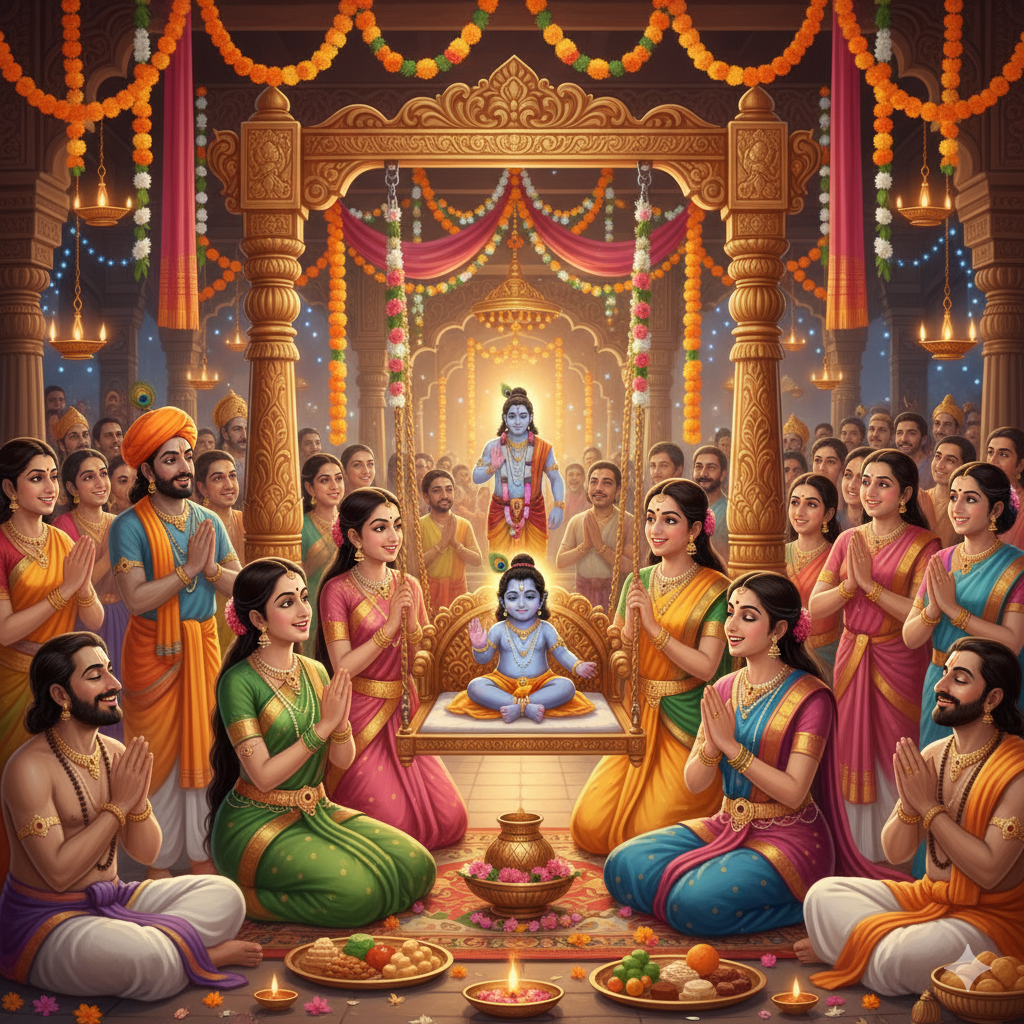
Janmashtami, Hindu festival celebrating the birth (janma) of the god Krishna on the eighth (ashtami) day of the dark fortnight (waning moon fortnight) of the Hindu calendar month Bhadrapada (August–September on the Gregorian calendar). The festival is a joyous time involving group dancing and singing songs (bhajans) as well as ritual practices of fasting and worship of Krishna
Legend of the birth of Krishna
According to the story of Krishna’s birth as related in the 10th book of the Bhagavata Purana (c. 10th century), Krishna is born as an avatar of Vishnu in order to relieve the world of its burden of demonic asuras (anti-gods) living as kings on Earth. One such demon king named Kamsa, who belongs to the Yadu clan, rules the town of Mathura (in modern Uttar Pradesh), and it is into this clan that Vishnu is instructed to take birth. When Kamsa’s sister Devaki marries Vasudeva, a prophetic voice from the sky (Sanskrit: ākāśavānī) foretells that her eighth son will kill Kamsa. Kamsa decides to kill Devaki to prevent his death from coming to pass, but Vasudeva intervenes and promises to hand over to the king every child born to him and Devaki. Kamsa imprisons the couple and murders their first six children. The seventh child, Balarama, is miraculously transferred to the womb of Rohini, Vasudeva’s first wife; in the Bhagavata Purana Balarama is considered a partial avatar of Vishnu and identified as Shesha, the serpent king.
At Vishnu’s birth as Krishna there are divine signs, and Vasudeva and Devaki are afforded a vision of their child as the supreme Vishnu in his celestial form before he transforms himself into the appearance of a human baby. As Vishnu he tells his human parents that Yogamaya, his divine feminine power, or Shakti, has been born simultaneously to Yashoda across the Yamuna River in Gokula (ancient Vraja) and that they should orchestrate a switch of the two infants. The prison doors open by divine will and illusory power, and Vasudeva carries the child across the river to Gokula, where he will then be raised in safety by his foster mother, Yashoda. When Kamsa comes to see the foretold eighth child, Yogamaya transforms into a goddess, frightening and humbling him. Krishna, after many other divine exploits, eventually kills his demon uncle Kamsa.
Etymology
The meaning of the Sanskrit word Janmashtami can be understood by splitting it into the two words, “Janma” and “Ashtami.” The word “Janma” means birth and the word “Ashtami” means eight; thus, Krishna Janmashtami is the celebration of Krishna’s birth on the eighth day of the dark fortnight (Krishna Paksha) in the month of Bhadrapada, also called Shravan, which falls in August–September of the Gregorian calendar.
भगवान श्रीकृष्ण की जन्म कथा
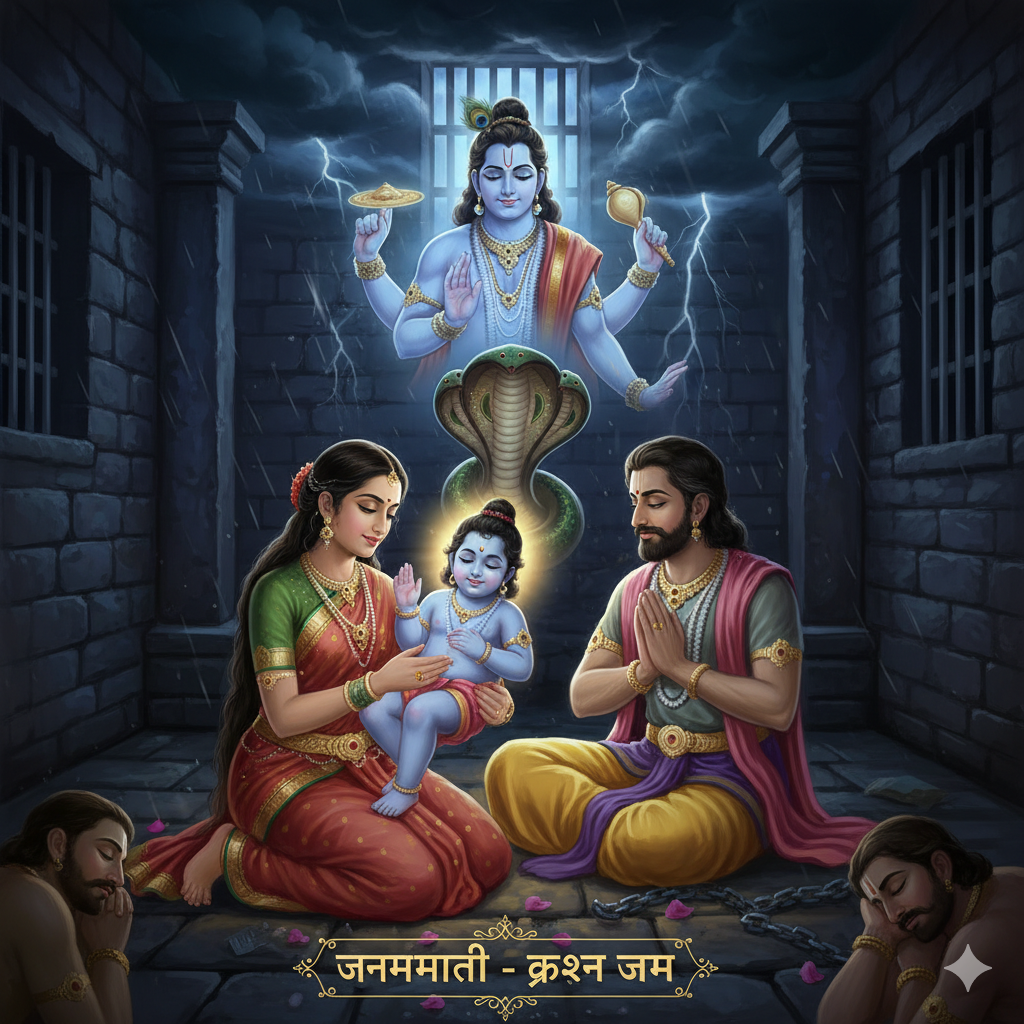
भाद्रपद कृष्ण अष्टमी को श्रीकृष्ण जन्माष्टमी कहते हैं, क्योंकि यह दिन भगवान श्रीकृष्ण का जन्मदिवस माना जाता है। इसी तिथि की घनघोर अंधेरी आधी रात को रोहिणी नक्षत्र में मथुरा के कारागार में वसुदेव की पत्नी देवकी के गर्भ से भगवान श्रीकृष्ण ने जन्म लिया था। यह तिथि उसी शुभ घड़ी की याद दिलाती है और सारे देश में बड़ी धूमधाम से मनाई जाती है।
जन्माष्टमी के दिन भगवान श्रीकृष्ण की जन्म संबंधी कथा भी सुनते-सुनाते हैं, जो इस प्रकार है-
‘द्वापर युग में भोजवंशी राजा उग्रसेन मथुरा में राज्य करता था। उसके आततायी पुत्र कंस ने उसे गद्दी से उतार दिया और स्वयं मथुरा का राजा बन बैठा। कंस की एक बहन देवकी थी, जिसका विवाह वसुदेव नामक यदुवंशी सरदार से हुआ था।
एक समय कंस अपनी बहन देवकी को उसकी ससुराल पहुंचाने जा रहा था।
रास्ते में आकाशवाणी हुई- ‘हे कंस, जिस देवकी को तू बड़े प्रेम से ले जा रहा है, उसी में तेरा काल बसता है। इसी के गर्भ से उत्पन्न आठवां बालक तेरा वध करेगा।’ यह सुनकर कंस वसुदेव को मारने के लिए उद्यत हुआ।
तब देवकी ने उससे विनयपूर्वक कहा- ‘मेरे गर्भ से जो संतान होगी, उसे मैं तुम्हारे सामने ला दूंगी। बहनोई को मारने से क्या लाभ है?’
कंस ने देवकी की बात मान ली और मथुरा वापस चला आया। उसने वसुदेव और देवकी को कारागृह में डाल दिया।
वसुदेव-देवकी के एक-एक करके सात बच्चे हुए और सातों को जन्म लेते ही कंस ने मार डाला। अब आठवां बच्चा होने वाला था। कारागार में उन पर कड़े पहरे बैठा दिए गए। उसी समय नंद की पत्नी यशोदा को भी बच्चा होने वाला था।
उन्होंने वसुदेव-देवकी के दुखी जीवन को देख आठवें बच्चे की रक्षा का उपाय रचा। जिस समय वसुदेव-देवकी को पुत्र पैदा हुआ, उसी समय संयोग से यशोदा के गर्भ से एक कन्या का जन्म हुआ, जो और कुछ नहीं सिर्फ ‘माया’ थी।
जिस कोठरी में देवकी-वसुदेव कैद थे, उसमें अचानक प्रकाश हुआ और उनके सामने शंख, चक्र, गदा, पद्म धारण किए चतुर्भुज भगवान प्रकट हुए। दोनों भगवान के चरणों में गिर पड़े। तब भगवान ने उनसे कहा- ‘अब मैं पुनः नवजात शिशु का रूप धारण कर लेता हूं।
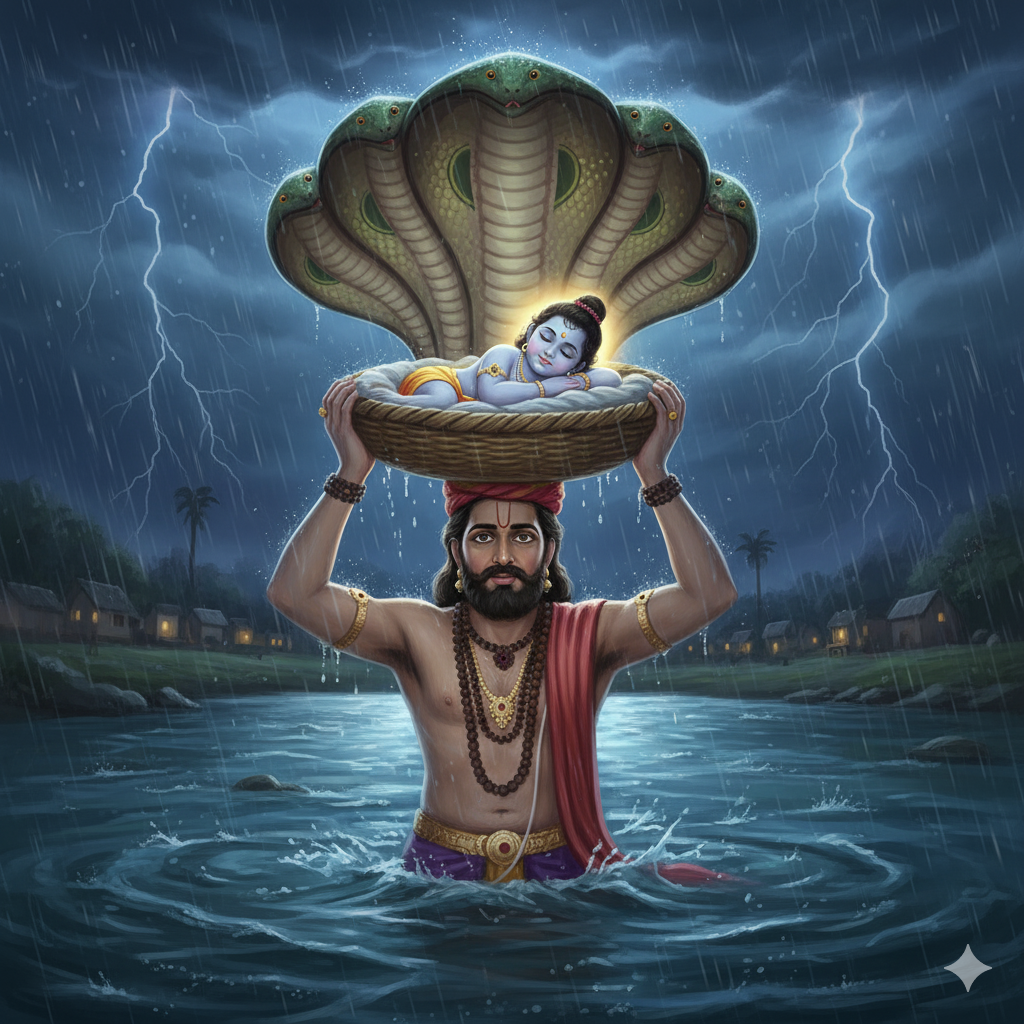
तुम मुझे इसी समय अपने मित्र नंदजी के घर वृंदावन में भेज आओ और उनके यहां जो कन्या जन्मी है, उसे लाकर कंस के हवाले कर दो। इस समय वातावरण अनुकूल नहीं है। फिर भी तुम चिंता न करो। जागते हुए पहरेदार सो जाएंगे, कारागृह के फाटक अपने आप खुल जाएंगे और उफनती अथाह यमुना तुमको पार जाने का मार्ग दे देगी।’
उसी समय वसुदेव नवजात शिशु-रूप श्रीकृष्ण को सूप में रखकर कारागृह से निकल पड़े और अथाह यमुना को पार कर नंदजी के घर पहुंचे। वहां उन्होंने नवजात शिशु को यशोदा के साथ सुला दिया और कन्या को लेकर मथुरा आ गए। कारागृह के फाटक पूर्ववत बंद हो गए।
अब कंस को सूचना मिली कि वसुदेव-देवकी को बच्चा पैदा हुआ है।
उसने बंदीगृह में जाकर देवकी के हाथ से नवजात कन्या को छीनकर पृथ्वी पर पटक देना चाहा, परंतु वह कन्या आकाश में उड़ गई और वहां से कहा- ‘अरे मूर्ख, मुझे मारने से क्या होगा? तुझे मारनेवाला तो वृंदावन में जा पहुंचा है। वह जल्द ही तुझे तेरे पापों का दंड देगा।’ यह है कृष्ण जन्म की कथा।
Observance and celebrations
Krishna Janmashtami holds significant importance to Krishnaites as well as Hindus around the world, and it is celebrated in diverse forms depending on their regional and cultural customs. Hindus celebrate Janmashtami by fasting, singing, praying together, preparing and sharing special food, night vigils, and visiting Krishna or Vishnu temples. The places of Mathura and Vrindavan are visited by pilgrims.Some mandirs organize recitation of Bhagavad Gita in the days leading up to Janmashtami. Many northern Indian communities organize dance-drama events called Rasa Lila or Krishna Lila. The tradition of Rasa Lila is particularly popular in the Mathura region, in northeastern states of India such as Manipur and Assam, and in parts of Rajasthan and Gujarat. It is acted out by numerous teams of amateur artists, cheered on by their local communities, and these drama-dance plays begin a few days before each Janmashtami. People decorate their houses with flowers and light. On this day, people chant “Hare Krishna hare Krishna, Krishna- Krishna Hare Hare”. The Janmashtami celebration is followed by Dahi Handi, which is celebrated the next day.
After Krishna’s midnight hour birth, forms of baby Krishna are bathed and clothed, then placed in a cradle. The devotees then break their fast by sharing food and sweets. Women draw tiny footprints outside their house doors and kitchen, walking towards their house, a symbolism for Krishna’s journey into their homes.
Northern India
Janmashtami is the largest festival in the Braj region of north India, in cities such as Mathura where Krishna was born according to Krishnaism, and in Vrindavan where he grew up.Vaishnava communities in these cities in Uttar Pradesh, as well as others in the state, as well as locations in Rajasthan, Delhi, Haryana, Uttarakhand and Himalayan north celebrate Janmashtami. Krishna temples are decorated and lighted up, they attract numerous visitors on the day, while Krishna devotees hold bhakti events and keep night vigil.
The festival typically falls as the monsoons in north India have begun retreating, fields laden with crops and rural communities have time to play. In the northern states, Janmashtami is celebrated with the Raslila tradition, which literally means “play (Lila) of delight, essence (Rasa)”. This is expressed as solo or group dance and drama events at Janmashtami, wherein Krishna related compositions are sung, music accompanies the performance, while actors and audience share and celebrate the performance by clapping hands to mark the beat. The childhood pranks of Krishna and the love affairs of Radha-Krishna are particularly popular. According to Christian Roy and other scholars, these Radha-Krishna love stories are Hindu symbolism for the longing and love of the human soul for the divine or Brahman.
Poetry describing the feats of Krishna became popular in the fifteenth and sixteenth centuries within the Braj region, and is written according to a vernacular called “Braj basha” (present-day “Hindi”/dialect of “Hindi”). The Braj basha poems of Surdas (collectively known as the Sursagar) are popularly recalled, some of which describe the birth and childhood of Krishna.
जन्माष्टमी का व्रत
जन्माष्टमी का व्रत भगवान श्रीकृष्ण के जन्मोत्सव के उपलक्ष्य में रखा जाता है। यह व्रत भाद्रपद मास के कृष्ण पक्ष की अष्टमी तिथि को किया जाता है। इस व्रत को करने से व्यक्ति को संतान, सुख, समृद्धि और मोक्ष की प्राप्ति होती है।
व्रत की विधि इस प्रकार है:
- संकल्प: जन्माष्टमी के दिन सुबह जल्दी उठकर स्नान करें और स्वच्छ वस्त्र पहनें। इसके बाद हाथ में जल, फूल और चावल लेकर व्रत का संकल्प लें।
- व्रत का प्रकार: आप अपनी श्रद्धा और स्वास्थ्य के अनुसार निर्जला (बिना पानी के) या फलाहार व्रत रख सकते हैं। व्रत में अन्न और नमक का सेवन नहीं करना चाहिए।
- पूजा की तैयारी: दिन भर भगवान कृष्ण का ध्यान और मंत्र जाप करें, जैसे ‘ॐ नमो भगवते वासुदेवाय’। शाम को पूजा स्थल को साफ करें और लकड़ी की चौकी पर लाल या पीले रंग का वस्त्र बिछाकर बाल गोपाल की प्रतिमा स्थापित करें।
- मध्यरात्रि की पूजा: भगवान श्रीकृष्ण का जन्म मध्यरात्रि (12 बजे) हुआ था। इसलिए इस समय विशेष पूजा की जाती है।
- अभिषेक: सबसे पहले बाल गोपाल को पंचामृत (दूध, दही, घी, शहद और शक्कर का मिश्रण) से स्नान कराएं। इसके बाद गंगाजल से स्नान कराएं।
- श्रृंगार और प्रसाद: भगवान का श्रृंगार करें, उन्हें नए वस्त्र पहनाएं और ताजे फूल चढ़ाएं। उन्हें माखन-मिश्री, पंजीरी और 56 भोग का प्रसाद अर्पित करें।
- आरती: भगवान की आरती उतारें, भजन गाएं और मंत्रों का जाप करें।
- व्रत का पारण: आधी रात को पूजा करने के बाद फलाहार करके व्रत खोलें। कुछ भक्त अगले दिन सूर्योदय के बाद अष्टमी तिथि या रोहिणी नक्षत्र के समाप्त होने पर व्रत का पारण करते हैं।
- दान: व्रत के अगले दिन ब्राह्मणों या जरूरतमंदों को भोजन कराएं और दान-दक्षिणा दें। अंत में गाय को भोजन जरूर कराएं।
व्रत के दौरान क्या खाएं:
- कुट्टू की खिचड़ी
- मखाने की खीर
- फल और सूखे मेवे
- साबूदाना
- दूध और दही
- सिंघारे के आटे का समोसा
व्रत के दौरान क्या न करें:
- व्रत में अन्न और नमक का सेवन न करें।
- प्याज, लहसुन और मांसाहार से दूर रहें।
- दिन में सोने से बचें।
- काले रंग के वस्त्र न पहनें।
आरती कुंजबिहारी की, श्री गिरिधर
- आरती कुंजबिहारी की, श्री गिरिधर कृष्ण मुरारी की ॥
- आरती कुंजबिहारी की, श्री गिरिधर कृष्ण मुरारी की ॥
- गले में बैजंती माला,
- बजावै मुरली मधुर बाला ।
- श्रवण में कुण्डल झलकाला,
- नंद के आनंद नंदलाला ।
- गगन सम अंग कांति काली,
- राधिका चमक रही आली ।
- लतन में ठाढ़े बनमाली
- भ्रमर सी अलक,
- कस्तूरी तिलक,
- चंद्र सी झलक,
- ललित छवि श्यामा प्यारी की,
- श्री गिरिधर कृष्ण मुरारी की ॥
- आरती कुंजबिहारी की,
- श्री गिरिधर कृष्ण मुरारी की ॥
- कनकमय मोर मुकुट बिलसै,
- देवता दरसन को तरसैं ।
- गगन सों सुमन रासि बरसै ।
- बजे मुरचंग,
- मधुर मिरदंग,
- ग्वालिन संग,
- अतुल रति गोप कुमारी की,
- श्री गिरिधर कृष्णमुरारी की ॥
- आरती कुंजबिहारी की,
- श्री गिरिधर कृष्ण मुरारी की ॥
- जहां ते प्रकट भई गंगा,
- सकल मन हारिणि श्री गंगा ।
- स्मरन ते होत मोह भंगा
- बसी शिव सीस,
- जटा के बीच,
- हरै अघ कीच,
- चरन छवि श्रीबनवारी की,
- श्री गिरिधर कृष्णमुरारी की ॥
- आरती कुंजबिहारी की,
- श्री गिरिधर कृष्ण मुरारी की ॥
- चमकती उज्ज्वल तट रेनू,
- बज रही वृंदावन बेनू ।
- चहुं दिसि गोपि ग्वाल धेनू
- हंसत मृदु मंद,
- चांदनी चंद,
- कटत भव फंद,
- टेर सुन दीन दुखारी की,
- श्री गिरिधर कृष्णमुरारी की ॥
- आरती कुंजबिहारी की,
- श्री गिरिधर कृष्ण मुरारी की ॥
- आरती कुंजबिहारी की,
- श्री गिरिधर कृष्ण मुरारी की ॥
- आरती कुंजबिहारी की,
- श्री गिरिधर कृष्ण मुरारी की ॥
श्री बालकृष्ण जी की आरती (Shri Balkishan Ji Ki Aarti)
- आरती बालकृष्ण की कीजै |
- अपनों जनम सुफल करि लीजै |
- श्रीयशुदा को परम दुलारौ |
- बाबा की अखियन कौ तारो ||
- गोपिन के प्राणन को प्यारौ |
- इन पै प्राण निछावरी कीजै |
- आरती बालकृष्ण की कीजै ||
- बलदाऊ कौ छोटो भैया |
- कनुआँ कहि कहि बोलत मैया |
- परम मुदित मन लेत वलैया |
- यह छबि नयननि में भरि लीजै |
- आरती बालकृष्ण की कीजै ||
- श्री राधावर सुघर कन्हैया |
- ब्रजजन कौ नवनीत खवैया |
- देखत ही मन नयन चुरैया |
- अपनौ सरबस इनकूं दीजे |
- आरती बालकृष्ण की कीजै ||
- तोतरि बोलनि मधुर सुहावै |
- सखन मधुर खेलत सुख पावै |
- सोई सुकृति जो इनकूं ध्यावै |
- अब इनकूं अपनों करि लीजै |
- आरती बालकृष्ण की कीजै ||
श्री कृष्ण जन्म स्तुति (bhaye pragat kripala Bhajan Aarti)
भये प्रगट गोपाला दीनदयाला यशुमति के हितकारी।
हर्षित महतारी सुर मुनि हारी मोहन मदन मुरारी ॥
कंसासुर जाना मन अनुमाना पूतना वेगी पठाई।
तेहि हर्षित धाई मन मुस्काई गयी जहाँ यदुराई॥
तब जाय उठायो हृदय लगायो पयोधर मुख मे दीन्हा।
तब कृष्ण कन्हाई मन मुस्काई प्राण तासु हर लीन्हा॥
जब इन्द्र रिसायो मेघ पठायो बस ताहि मुरारी।
गौअन हितकारी सुर मुनि हारी नख पर गिरिवर धारी॥
कन्सासुर मारो अति हँकारो बत्सासुर संघारो।
बक्कासुर आयो बहुत डरायो ताक़र बदन बिडारो॥
तेहि अतिथि न जानी प्रभु चक्रपाणि ताहिं दियो निज शोका।
ब्रह्मा शिव आये अति सुख पाये मगन भये गये लोका॥
यह छन्द अनूपा है रस रूपा जो नर याको गावै।
तेहि सम नहि कोई त्रिभुवन सोयी मन वांछित फल पावै॥
नंद यशोदा तप कियो , मोहन सो मन लाय।
देखन चाहत बाल सुख , रहो कछुक दिन जाय॥
जेहि नक्षत्र मोहन भये ,सो नक्षत्र बड़िआय।
चार बधाई रीति सो , करत यशोदा माय॥