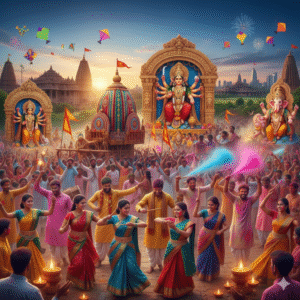
Gudi Padwa, Ugadi & Cheti Chand – Celebrating the New Year of Hope and Prosperity Gudi Padwa, Ugadi, and Cheti Chand are celebrated across India as marks of the lunisolar Hindu New Year. These festivals welcome spring and symbolize new beginnings, prosperity,…
Gudi Padwa, Ugadi & Cheti Chand – Celebrating the New Year of Hope and Prosperity
Gudi Padwa, Ugadi, and Cheti Chand are celebrated across India as marks of the lunisolar Hindu New Year. These festivals welcome spring and symbolize new beginnings, prosperity, and the triumph of good over evil. Each region celebrates in its own unique way, reflecting local traditions and culture.
Gudi Padwa is primarily celebrated in Maharashtra and parts of Goa. The name ‘Gudi’ refers to a brightly decorated stick (or bamboo staff) adorned with a silk cloth, neem leaves, mango leaves, and a garland of flowers, topped with an inverted silver or copper pot. This Gudi is hoisted outside homes,symbolizing victory, prosperity, and the warding off of evil.
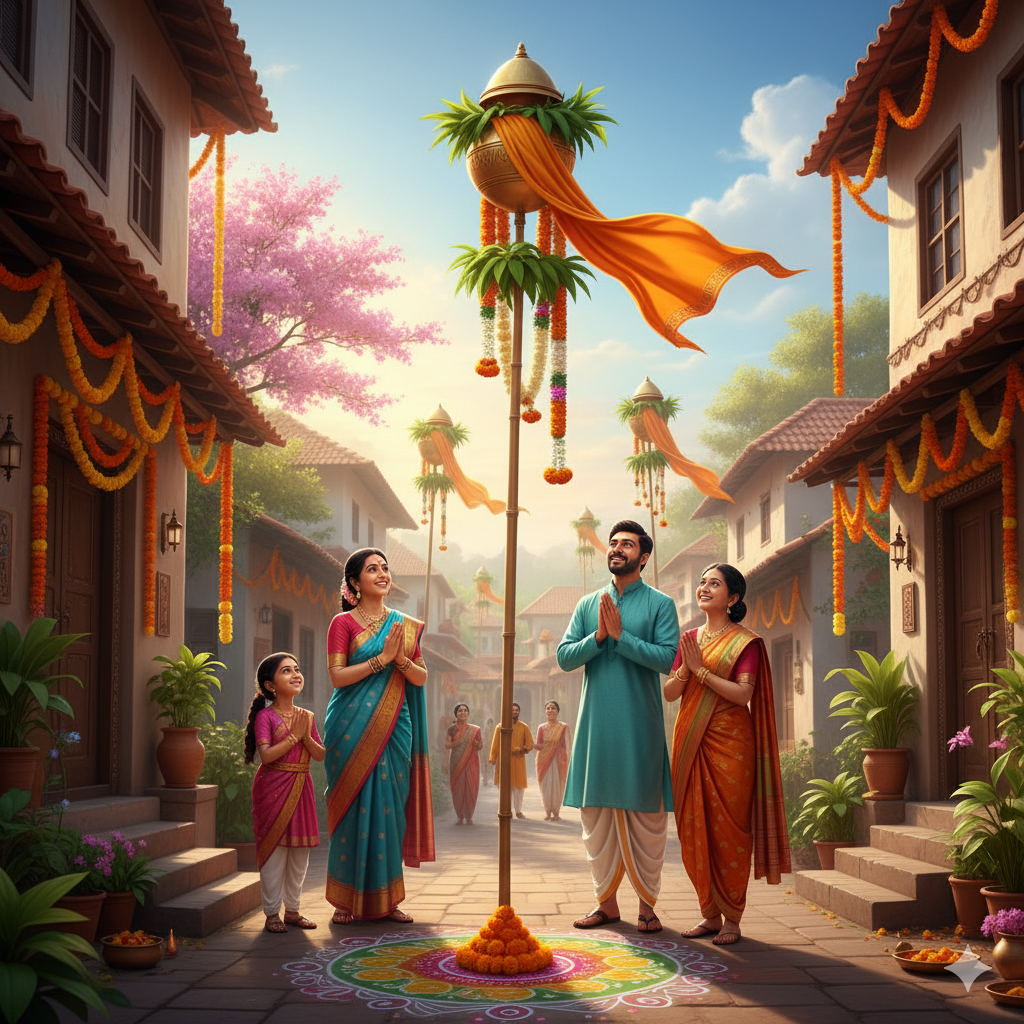
People draw beautiful rangolis, prepare traditional delicacies like Puran Poli, and begin the day by consuming a paste of neem leaves and jaggery, signifying that life is a mix of bitter and sweet experiences. It also marks the start of the Chaitra Navratri.
Ugadi is the New Year celebration in Karnataka, Andhra Pradesh, and Telangana. The word ‘Ugadi’ is derived from ‘Yuga’ (age) and ‘Adi’ (beginning), meaning the beginning of a new age.
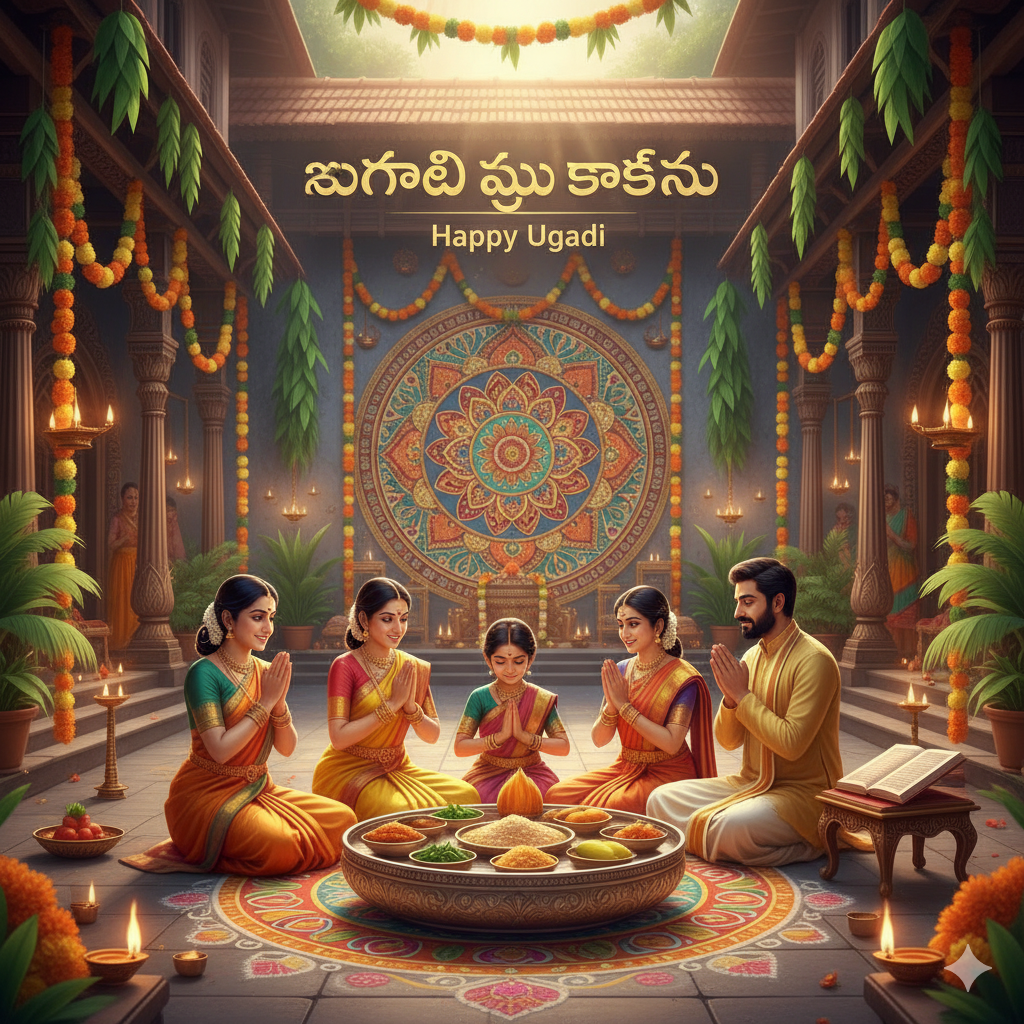
Ugadi is marked by cleaning homes, drawing colorful rangolis, and decorating entrances with mango leaves. A unique dish called ‘Ugadi Pacchadi’ is prepared, which combines six tastes – sweet (jaggery), sour (tamarind), salty, bitter (neem), spicy (chilli), and tangy (raw mango) – symbolizing the various emotions and experiences one encounters in the coming year.
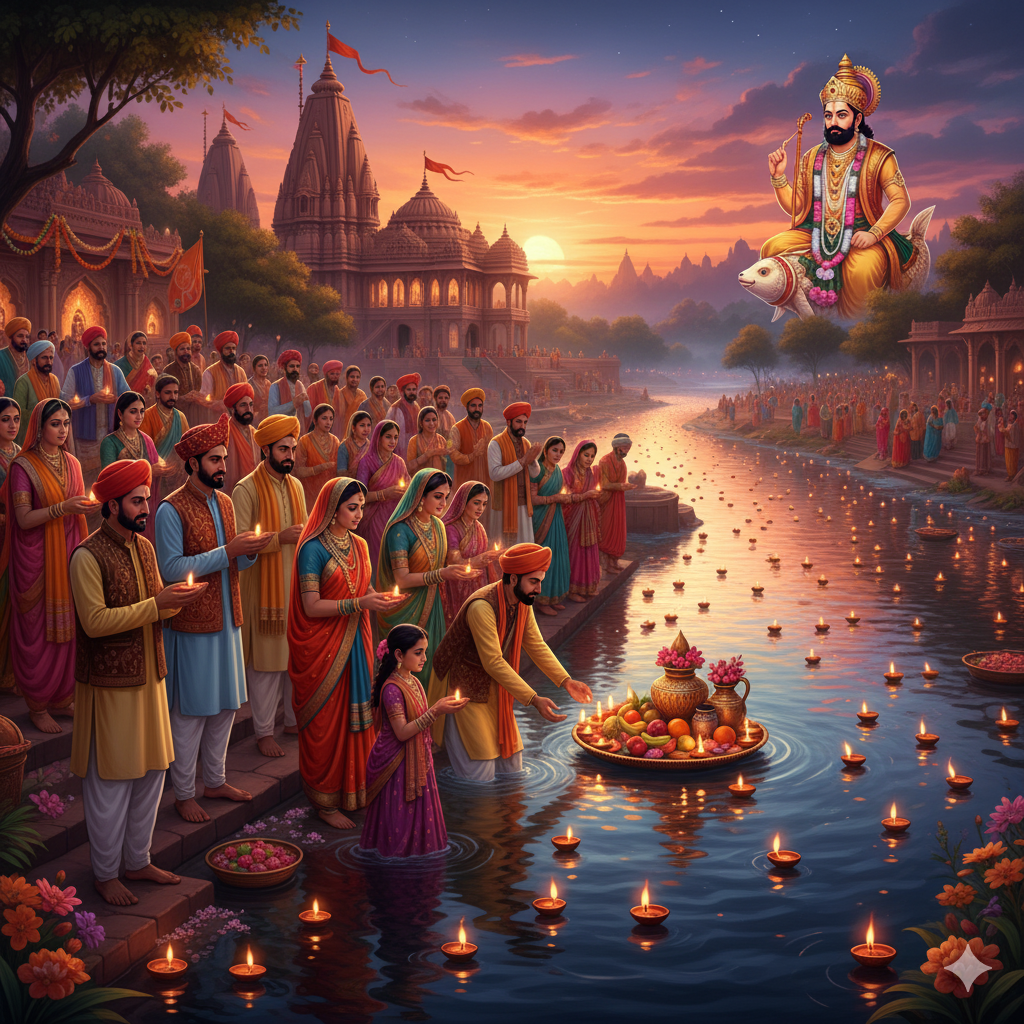
Cheti Chand is celebrated by the Sindhi community worldwide as their New Year. It commemorates the birth of Lord Jhulelal, the revered deity of Sindhis. On this day, Sindhis offer prayers and thanksgiving to water, which is considered sacred.
Predominantly celebrated in the state of Maharashtra, Gudi
Padwa marks the beginning of the harvest season. The day is celebrated as New Year’s Day for the people of Maharashtra, as per the lunisolar . The phrase “Gudi Padwa” is coined from two words—Gudi meaning Brahma’s flag & Padwa, Padva or Paddava meaning the first day of the bright phase of the moon.Predominantly celebrated in the state of Maharashtra, Gudi
Gudi Padwa is celebrated on the first day of the month of Chaitra as per the Hindu lunisolar calendar, which usually falls between March and April as per the Gregorian calendar. The festival will be celebrated on the 30th of March 2025.
There are many stories and mythological references to Gudi Padwa. In Brahma Purana, one of the sacred Hindu scriptures, it’s mentioned that Lord Brahma recreated the world after a natural calamity left all the people dead and stopped time. On this day, following Brahma’s efforts, time restarted, and the era of justice and truth began. For this reason Lord Brahma is worshipped on this day.
Another story says that Lord Rama returned to Ayodhya with Sita and Laxman after living 14 years in exile. The day celebrates Lord Rama’s victory over Ravana. Hence, Gudi or Brahma’s flag is hoisted in households like how it was hoisted in Ayodhya as a victory flag (as per the myth) after Rama’s victory over Ravana.
However, there’s another historical significance of Gudi. History beckons that Chhatrapati Shivaji Maharaj defeated the Mughals and freed the people of the state from the Mughal rule. This is one of the major reasons why people of Maharashtra hoist Gudi on this day. It’s believed that the flag wards off any kind of evil from entering the premises of houses.
How is Gudi Padwa Celebrated?
As the festival primarily celebrates welcoming the coming year afresh, people clean their houses and courtyards to keep everything neat and tidy. A customary oil-bath is a must on this day. Women decorate the entrance doors with “Rangolis” of different patterns and colours. Wearing new clothes, especially kurta-pajamas and sarees forms an integral part of the custom.
Probably the most important part of the festival is the hoisting of Gudi. After the Gudi is hoisted, people form a human pyramid to reach the Gudi and break the coconut that’s inside it. It’s an important ritual of the festival and is followed almost everywhere in Maharashtra. Only men and adolescent boys are allowed to take part in this ritual.
Another ritual is to consume Neem leaves, a custom that marks the beginning of the festival. The leaves can be eaten raw or can be prepared as a chutney by grinding it and then mixing jaggery and other seeds with it. Other dishes that are prepared on this day are Shrikhand—a sweet that’s consumed with Poori, Pooran Poli, Chana, and Soonth Panak.
So, you can be a part of this festival too if you are in Maharashtra. A variety of traditional food, especially sweets, are prepared on this day. The festival is also celebrated in other parts of India in the form of (Karnataka, Andhra Pradesh and Telangana), Bihu (Assam), and Poila Boishakh (West Bengal).
How is Gudi Padwa Celebrated?
As the festival primarily celebrates welcoming the coming year afresh, people clean their houses and courtyards to keep everything neat and tidy. A customary oil-bath is a must on this day. Women decorate the entrance doors with “Rangolis” of different patterns and colours. Wearing new clothes, especially kurta-pajamas and sarees forms an integral part of the custom.
Probably the most important part of the festival is the hoisting of Gudi. After the Gudi is hoisted, people form a human pyramid to reach the Gudi and break the coconut that’s inside it. It’s an important ritual of the festival and is followed almost everywhere in Maharashtra. Only men and adolescent boys are allowed to take part in this ritual.
Another ritual is to consume Neem leaves, a custom that marks the beginning of the festival. The leaves can be eaten raw or can be prepared as a chutney by grinding it and then mixing jaggery and other seeds with it. Other dishes that are prepared on this day are Shrikhand—a sweet that’s consumed with Poori, Pooran Poli, Chana, and Soonth Panak.
Gudi Padwa puja
- Prepare and clean: Clean your home thoroughly and decorate the entrance with rangoli.
- Begin with an oil bath: Start the day with an oil bath before sunrise.
- Decorate the Gudi: Create a Gudi by placing a decorated pot upside-down on a bamboo staff wrapped in a silk cloth, with a garland of neem and mango leaves at the top. Adorn it with sindoor and akshata.
- Hoisting the Gudi: After sunrise, hoist the Gudi at the entrance of your home, followed by a prayer to Lord Brahma and Lord Vishnu.
- Perform the puja:
- Light a diya (lamp) and incense sticks (agarbatti).
- Offer prasad (sweet offerings) like Puran Poli or Shrikhand.
- Offer akshata (turmeric-coated rice) and flowers.
- Perform an aarti while chanting mantras or singing devotional songs.
- Conduct a havan (fire ritual) to worship Lord Vishnu.