Gangaur Festival – Celebration of Love, Devotion, and Prosperity in Rajasthan Indeed, the Gangaur Festival is a beautiful embodiment of love, devotion, and prosperity, deeply rooted in the cultural fabric of Rajasthan. It’s a 16-day celebration that truly brings out…
Gangaur Festival – Celebration of Love, Devotion, and Prosperity in Rajasthan
Indeed, the Gangaur Festival is a beautiful embodiment of love, devotion, and prosperity, deeply rooted in the cultural fabric of Rajasthan. It’s a 16-day celebration that truly brings out the vibrant spirit and rich traditions of the region.
The festival revolves around the worship of Goddess Gauri, the divine consort of Lord Shiva, who represents purity, austerity, and marital fidelity. Unmarried girls observe fasts and rituals to seek a husband like Shiva, while married women pray for the long life, well-being, and prosperity of their spouses. It’s a time when women’s devotion and hopes for a blissful married life are at their peak.
During Gangaur, women meticulously prepare clay idols of Isar (Lord Shiva) and Gauri, adorning them with colorful clothes, intricate jewelry, and fresh flowers. These idols become the focal point of their daily worship.
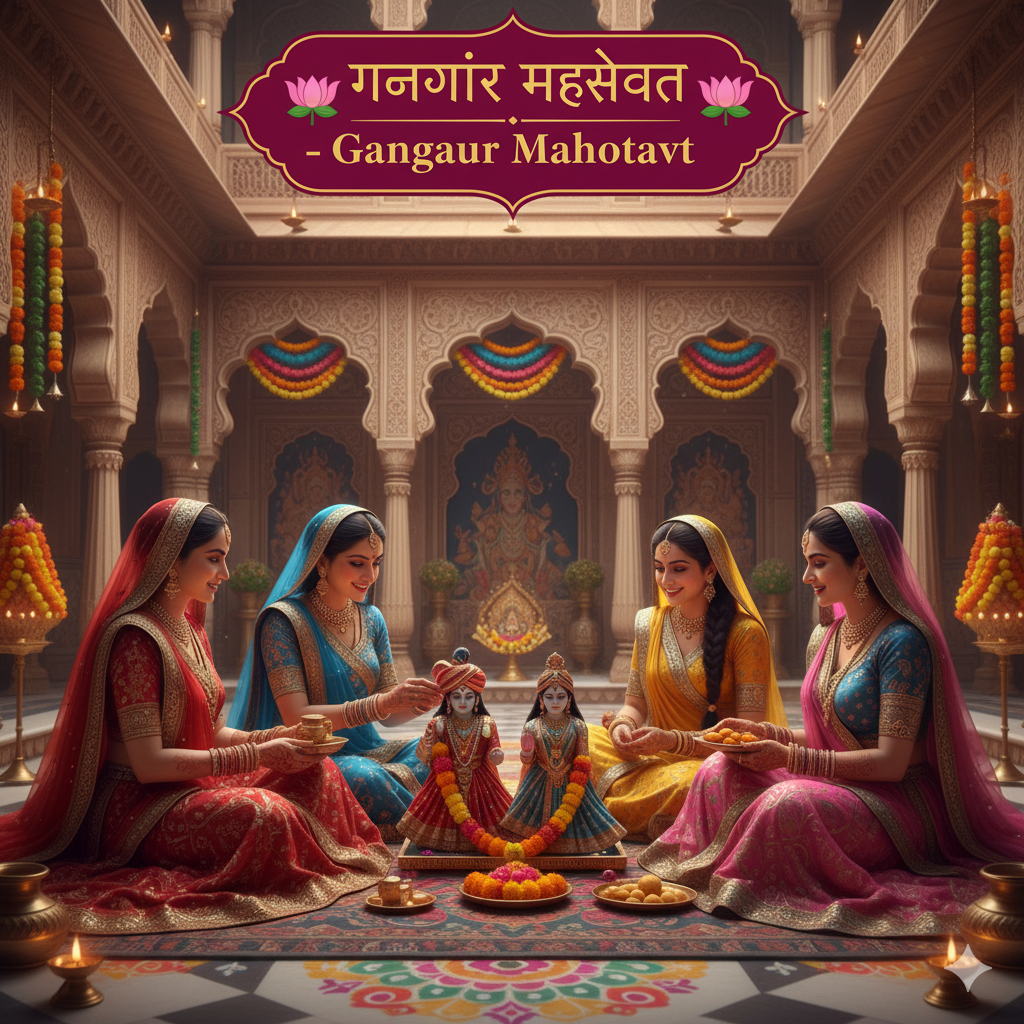
Every day, women gather to sing traditional Gangaur folk songs, perform rituals, and offer sweets and fruits to the deities. Applying intricate mehndi designs on their hands is also a significant part of the celebration, believed to bring good fortune.
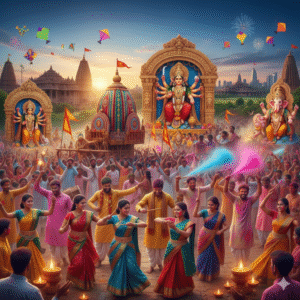
The festival culminates in spectacular processions on the final day, where the beautifully decorated idols of Isar and Gauri are carried through the streets on palanquins. Women, dressed in their finest traditional Rajasthani attire like ghagra-cholis, participate with immense enthusiasm, singing and dancing.
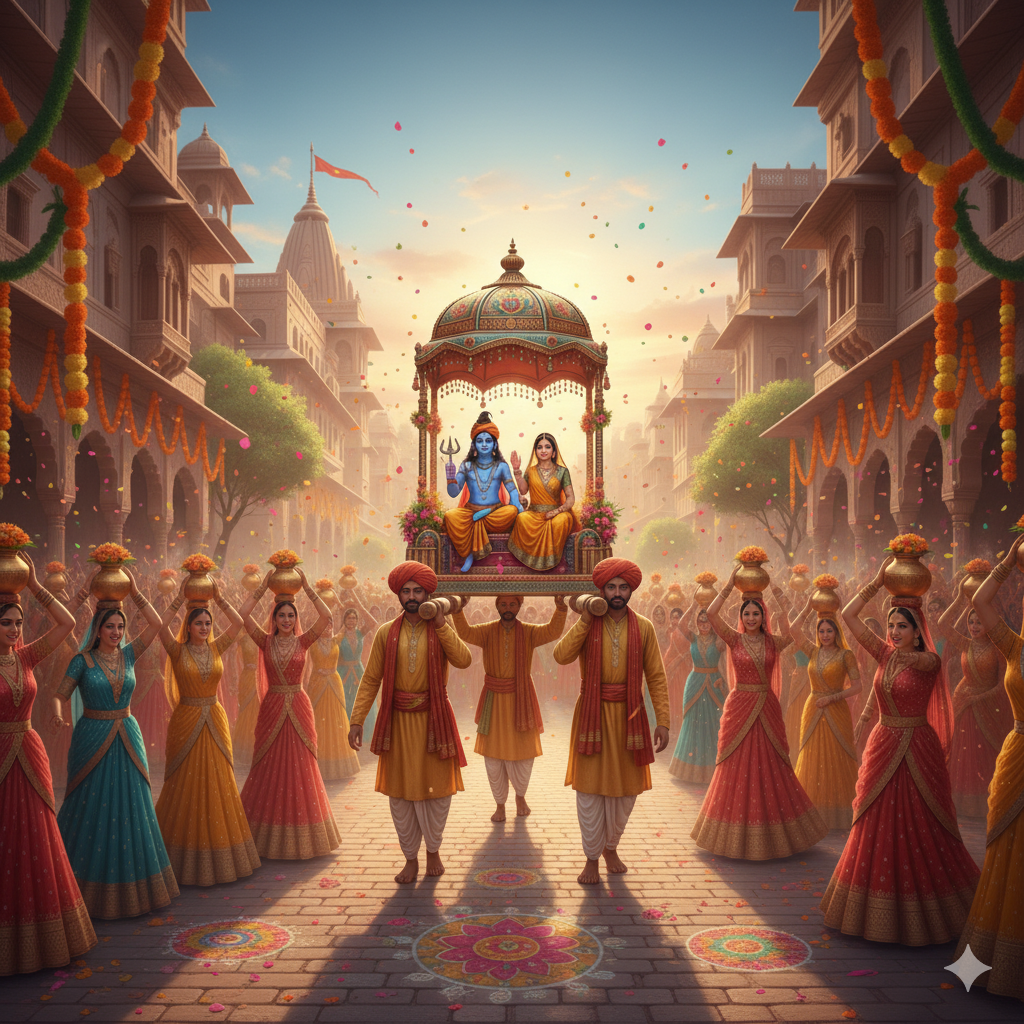
Gangaur is one of the most important festivals in Rajasthan. In some form or the other, it is celebrated all over Rajasthan. “Gan” is a synonym for Lord Shiva & “Gauri” or “Gaur” stands for Goddess Parvati, the heavenly consort of Lord Shiva. Gangaur celebrates the union of the two and is a symbol of conjugal & marital happiness. Gangaur is celebrated in the month of Chaitra (March-April), the first month of the Hindu calendar. This month marks the end of winter & the onset of spring. This festival is celebrated especially by women, who worship clay idols of “Gan” & “Gauri” in their houses. These idols are worshipped by unmarried girls who seek the blessings of Gan & Gauri for a good husband, while the married women pray for the good health and long life of their husbands. This worship which starts from the first day of the chaitra month culminates on the 18th day into Gangaur festival with a great religious fervor. On the eve of Gangaur festival, women decorate their palms and fingers with henna. The idols of Gan and Gauri are immersed in a pond or in a nearby lake on the last day of the festival. A traditional procession of Gangaur commences form the Zanani-Deodhi of the City Palace, passing through Tripolia Bazaar, Chhoti Chaupar, Gangauri Bazaar, Chaugan stadium and finally converges near the Talkatora. The procession is headed by a colorful pageantry of old palanquins, chariots, bullock carts and performing folk artists.
गणगौर, जिसे गौरी तृतीया के नाम से भी जाना जाता है, राजस्थान, मध्य प्रदेश और गुजरात के कुछ हिस्सों में मनाया जाने वाला एक प्रमुख त्योहार है। यह त्योहार मुख्य रूप से महिलाओं द्वारा किया जाता है, जो देवी पार्वती (गौरी) और भगवान शिव (ईसर) की पूजा करती हैं।
गणगौर पूजा के प्रमुख पहलू
- गण और गौर: ‘गणगौर’ शब्द ‘गण’ (भगवान शिव) और ‘गौर’ (माता पार्वती) से मिलकर बना है। यह त्योहार प्रेम और वैवाहिक सुख का प्रतीक माना जाता है।
- महत्व:
- विवाहित महिलाएँ: वे अपने पति के अच्छे स्वास्थ्य, लंबी उम्र और सुखमय वैवाहिक जीवन के लिए गौरी माता से प्रार्थना करती हैं।
- अविवाहित लड़कियाँ: वे शिव जैसे उत्तम वर पाने की कामना के लिए यह व्रत करती हैं।
- अवधि: यह त्योहार होली के अगले दिन से शुरू होकर 16 से 18 दिनों तक चलता है और चैत्र माह के शुक्ल पक्ष की तृतीया को समाप्त होता है।
- पूजा विधि:
- मूर्तियाँ: महिलाएँ मिट्टी से बनी शिव और पार्वती की मूर्तियों को घर में स्थापित करती हैं।
- कलश स्थापना: चैत्र कृष्ण एकादशी को जल से भरा कलश स्थापित किया जाता है।
- साज-सज्जा: मूर्तियों को नए वस्त्रों और गहनों से सजाया जाता है।
- व्रत और पूजा: व्रत रखकर प्रतिदिन गौरी-शंकर की पूजा की जाती है, उन्हें फूल, फल और मिठाई अर्पित की जाती है।
- गीत और अनुष्ठान: पूजा के दौरान पारंपरिक लोकगीत गाए जाते हैं। दूब से पानी के छींटे देते हुए “गोर गोर गोमती” जैसे गीत गाने का रिवाज है।
- जुलूस और विसर्जन:
- शोभा यात्रा: अंतिम दिनों में गौरी और ईसर की मूर्तियों को पालकियों या रथों में रखकर शोभायात्रा निकाली जाती है।
- विसर्जन: यह जुलूस किसी तालाब या नदी के किनारे समाप्त होता है, जहाँ मूर्तियों का विसर्जन किया जाता है।
- मेहंदी और पकवान: त्योहार के दौरान महिलाएँ अपने हाथों में मेहंदी रचाती हैं और घेवर जैसी पारंपरिक मिठाइयाँ बनाई जाती हैं।
- कथा: एक पौराणिक कथा के अनुसार, माता पार्वती ने भगवान शिव को पति के रूप में पाने के लिए 16 दिनों तक कठोर तपस्या की थी, जिसके बाद यह व्रत 16 दिनों तक किया जाने लगा।
अलग-अलग स्थानों में गणगौर
- राजस्थान: जयपुर और उदयपुर जैसे शहरों में गणगौर के भव्य जुलूस और उत्सव देखने को मिलते हैं।
- मध्य प्रदेश: धार जिले में यह पर्व बड़े उत्साह से मनाया जाता है, जहाँ गणगौर माता को सर्वोच्च सम्मान दिया जाता है।
Pooja Samagri
Idol of Gaur, Isar (Shiva), Kaniram, Rova bai, Sova bai (Kaniram, Rova bai & Sova bai are Isarji’s siblings).
Plain white paper, mehndi, kajal, rice, moli, brass kalash full of water, flowers, green grass (dub, jawara) and Gangaur’s geet book.
Pooja Process
Women can’t drink or eat anything before performing this pooja every day of Gangaur. Some women observe fast all days of Gangaur while some women fast on the last day of Gangaur
Following is the pooja process carried out while singing Gangaur songs:
1. Place the Gangaur idols at a neat and clean place over a wooden “Paata” or platform. Alternatively, paste the Gangaur chart on a wall where the pooja will be performed. Along with this, paste one plain white paper near the idol.
2. Put “tilak” or “Kumkum” and rice on your forehead
3. Take green grass (dub or dob) and take out 8 sticks from their edge for all the idols respectively. For unmarried girls, it is 16 for each. These sticks are used as toothbrush for the idols so take little water with it to each of the idols and touch them to their mouth.
4. Take some more grass for doing Gangaur Pooja and keep it in your hand till the puja is done.
5. Put tilak on the idol’s forehead.
6. Offer “moli” or red thread and flowers and also tie the moli to your hand.
7. Offer phal to the idols.
8. Make 8 small dots each of Kumkum, mehndi and kajal on the plain white paper and 16 each for unmarried girls and newly married women.
9. Take some jawara with dub in your hands and dip them into the kalash of fresh water and sprinkle that water on the idols with the jawara. Keep doing this action while singing a Gangaur song and keep them in our hand while listening to the Kahani.
10. Once the Kahani is finished, sprinkle water on your head with the dub and jawara, offer these dub and jawara to the idol and tie some pieces onto bangles on both of your hands.
Important Elements
Jawario is a shallow earthen bowl and is used for sowing wheat in the ashes collected after the festival of Holi. Then during the Gangaur festival women carry this vessel on their head singing songs and throw it in a well. The vessel is made on wheel and is never decorated
Clay or wooden idols of Shiva and Gauri are decorated and worshipped during the full course of the festival. These figures are then placed with wheat grass and flowers, wheat plays an important role in the rituals as it signifies harvest. These idols are dressed andadorned in new attire and jewellery with ornaments specially made for this festival idols
Married woman receives gift hampers from their parents known as Sinjara, which comprises of clothes, jewellery items, makeup items and a sweet dish called Ghewar is characteristic of the Gangaur festival.
Women utilize this hamper to get ready on the final or main celebration day. People buy ghewar for themselves and to distribute it among relatives and friends.
Decorating hands and feet with beautiful designs made out of Mehndi (myrtle paste) is also done during Gangaur. Almost all Hindu cultural festivals include applying mehndi with the festivities
गणगौर पर्व विशेष : गौरी माता की आरती, यहां पढ़ें
Gangaur ki aarti
माता पार्वती जी की आरती
जय पार्वती माता जय पार्वती माता
ब्रह्म सनातन देवी शुभ फल कदा दाता।
जय पार्वती माता जय पार्वती माता।
अरिकुल पद्मा विनासनी जय सेवक त्राता
जग जीवन जगदम्बा हरिहर गुण गाता।
जय पार्वती माता जय पार्वती माता
सिंह को वाहन साजे कुंडल है साथा
देव वधु जहं गावत नृत्य कर ताथा।
जय पार्वती माता जय पार्वती माता।
सतयुग शील सुसुन्दर नाम सती कहलाता
हेमांचल घर जन्मी सखियन रंगराता।
जय पार्वती माता जय पार्वती माता।
शुम्भ निशुम्भ विदारे हेमांचल स्याता
सहस भुजा तनु धरिके चक्र लियो हाथा।
जय पार्वती माता जय पार्वती माता।
सृष्टि रूप तुही जननी शिव संग रंगराता
नंदी भृंगी बीन लाही सारा मदमाता।
जय पार्वती माता जय पार्वती माता।
देवन अरज करत हम चित को लाता
गावत दे दे ताली मन में रंगराता।
जय पार्वती माता जय पार्वती माता।
श्री प्रताप आरती मैया की जो कोई गाता
सदा सुखी रहता सुख संपति पाता।
जय पार्वती माता मैया जय पार्वती माता।