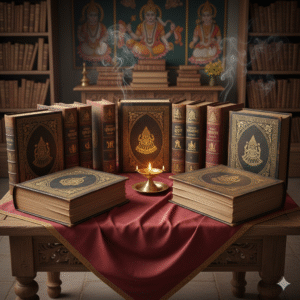
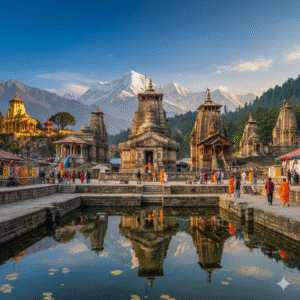
Guru Purnima Celebration in India This is a day to honour the gurus/teachers in our lives that play a significant role in shaping our future and promoting good values. Discover how it highlights the importance of knowledge transmission, mentorship, and…
Guru Purnima Celebration in India
This is a day to honour the gurus/teachers in our lives that play a significant role in shaping our future and promoting good values. Discover how it highlights the importance of knowledge transmission, mentorship, and lifelong learning – key values in academics.
Guru Purnima is one of the most sacred festivals in India, celebrated to honor gurus and teachers who guide us in spiritual and academic life. It is observed by Hindus, Buddhists, and Jains with devotion and reverence. The day emphasizes gratitude, respect, and learning from spiritual masters.
Indian culture always emphasises ‘mata, pita, guru, and daivam.’ A Sanskrit phrase that means one needs to respect and honour their mother, father, and teacher before God. Guru Purnima is a celebration of one of those fundamentals—the guru or master. As parents, you always teach kids to respect you, but Guru Purnima is a perfect time to teach your little ones the importance of honouring their gurus. Teaching children to express this reverence through writing not only deepens their understanding but also builds their confidence. If your child’s preschool has a Guru Purnima essay competition and you want to help them participate meaningfully, this article is for you. Here, we’ll share Guru Purnima essays that capture the essence of the festival and help your little one stand out
My teacher, (teacher’s name), is my school guru. She teaches me A-B-C and 1-2-3. When I fight with my friend, she helps us say sorry and become friends again. She listens when I tell her about my new toy or my pet. (teacher’s name), you make school so much fun!
On Guru Purnima, I want to say “Thank you” to all my teachers – Mama, Papa, and (teacher’s name). You help me learn new things every day. You make me smart, kind, and happy. Happy Guru Purnima to all our wonderful teachers!
It’s important to remember that these are some samples of short essays on Guru Purnima and long essays on Guru Purnima. Think of them as starting points or a basic structure for your child’s speech or essay. To make them feel more personal and genuine, you will have to adapt the content so it reflects your little one’s voice and thoughts. Here are some tips to do that:
7 Lines on Guru Purnima
Here are 7 lines on Guru Purnima that you can share with your little one, which they can include in their essay on Guru Purnima.
Students show their teachers love with cards and gifts.
Guru purnima mahatva
Guru Purnima is a day to express gratitude to our teachers and guides. It is celebrated on the full moon day in July.
This day is also associated with Guru Ved Vyasa, who authored the Mahabharata.
On Guru Purnima, we express our gratitude to both school teachers and spiritual teachers.
Many people visit temples or offer flowers to their spiritual leaders.
People believe blessings from gurus help us do well in life.
A guru can be anyone who guides us, like a parent, teacher, or friend.
Guru Purnima is a spiritual festival celebrating the invaluable role of teachers (gurus) in dispelling ignorance and guiding disciples toward knowledge and enlightenment. The word guru comes from two Sanskrit roots: gu, meaning “darkness,” and ru, meaning “remover”. This auspicious day is observed on the full moon day (Purnima) of the Hindu month of Ashadha, which falls in June or July.
The significance of Guru Purnima is rooted in the reverence for the ancient tradition of honoring gurus, who are seen as spiritual and academic mentors. This festival is celebrated by Hindus, Buddhists, and Jains, with each tradition having its own unique historical and religious reasons.
Significance in Hinduism
For Hindus, the festival has two primary associations:
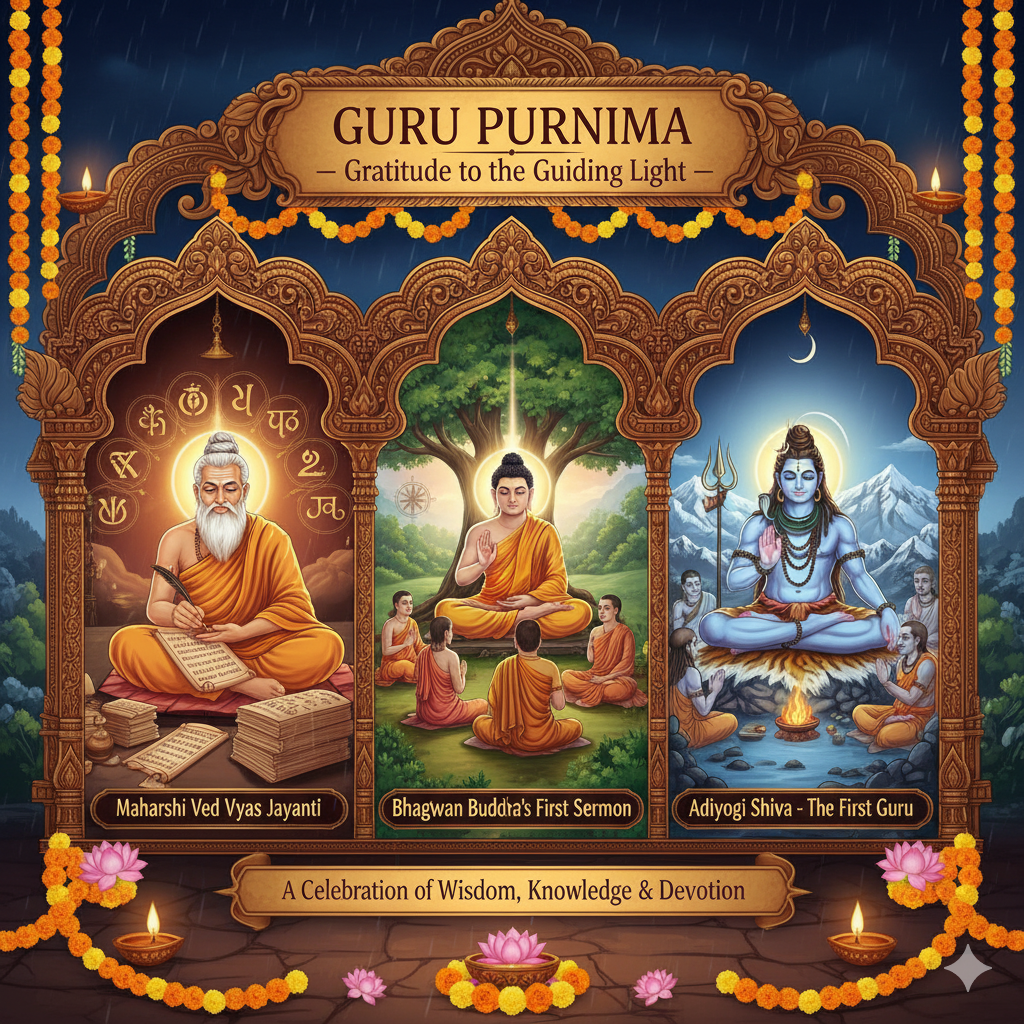
- Birth of Ved Vyasa: Guru Purnima is also known as Vyasa Purnima, as it is believed to be the birth anniversary of the sage Ved Vyasa. He is revered as the Adi Guru, or the “first guru,” for his immense contributions to Hindu scripture, including compiling the Vedas and writing the Mahabharata.
- Adiyogi Shiva: According to yogic tradition, it was on this day that Lord Shiva became the first guru, or Adi Yogi, and began the transmission of the yogic sciences to the seven sages (Saptarishis).
Significance in Buddhism
Buddhists observe Guru Purnima to honor the Buddha, who is considered the ultimate teacher.
- The First Sermon: It is believed that five weeks after attaining enlightenment, the Buddha gave his first sermon to his initial five disciples at Sarnath.
- Starting the Rains Retreat: The festival also marks the beginning of the rainy season retreat, or Vassa, a three-month period when monks remain in a single place to engage in intensive meditation.
Significance in Jainism
Jains celebrate this day to commemorate Lord Mahavira and his spiritual teachings.
- Gautam Swami’s Initiation: The festival marks the day that Lord Mahavira, the 24th Tirthankara, made Gautam Swami his first disciple, thus officially becoming a guru.
- Start of Chaturmas: For Jains, this also marks the beginning of Chaturmas, the four-month monsoon period for monastic observance.
Broader significance
Beyond religious origins, Guru Purnima holds universal importance for recognizing all teachers and mentors in our lives.
- Dispelling Ignorance: The core message of the festival is to acknowledge the role of a guru in dispelling the darkness of ignorance and guiding one toward inner wisdom.
- Honoring All Guides: A “guru” can be anyone who imparts wisdom, including parents, academic teachers, and spiritual leaders.
- Gratitude and Reflection: The day is a time for disciples to express gratitude through prayers, offerings, and acts of service, and to reaffirm their commitment to the path of learning and self-improvement.
How it is Celebrated:
- Guru Puja: Devotees express reverence and gratitude towards their spiritual gurus, teachers, parents, or anyone who has imparted valuable knowledge.
- Worship & Offerings: Special prayers, chanting of mantras, and offering of clothes, food, and dakshina (donations) to Brahmins and the needy are common.
- Service & Satsang: Many visit ashrams or temples to serve their Gurus and participate in satsangs (spiritual gatherings).
- Self-Reflection: The day is also considered important for self-introspection and meditation, aiming to connect with one’s inner wisdom.
Guru Purnima is a profound celebration of wisdom, knowledge, and devotion, reminding us of the invaluable role of a Guru in shaping our lives and guiding us toward spiritual enlightenment.