Makar Sankranti – Festival of Sun, Harvest, and New Beginnings According to Hindu beliefs, on this day Surya Dev (the Sun God) visits his son Shani Dev, the ruler of Capricorn.Their meeting is a reminder that love and harmony can…
Makar Sankranti – Festival of Sun, Harvest, and New Beginnings
According to Hindu beliefs, on this day Surya Dev (the Sun God) visits his son Shani Dev, the ruler of Capricorn.
Their meeting is a reminder that love and harmony can overcome all differences.
Makar Sankranti also signifies the end of Dakshinayan (the Sun’s southern journey) and the start of Uttarayan (northern journey) — considered highly auspicious.
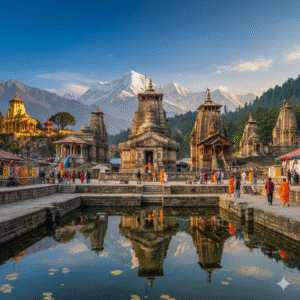
On this day, people wake up early, take a holy bath in sacred rivers like Ganga, Yamuna, or Godavari, and offer Arghya (water) to the Sun while chanting:
“Om Suryaya Namah”
“Om Ghrini Suryaya Namah”
Makar Sankranti is one of the most sacred Hindu festivals that celebrates the Sun’s transition into Capricorn (Makar Rashi).
This marks the beginning of Uttarayan, when the Sun starts moving towards the northern hemisphere — symbolizing light, positivity, and new beginnings.
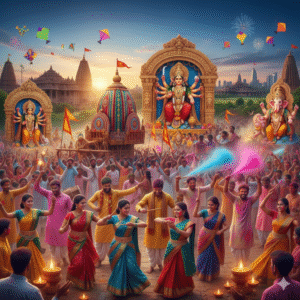
It is a festival of gratitude, harvest, and divine change, observed with joy all across India.
It is believed that this ritual brings health, purity, and spiritual upliftment.
Festival of Harvest and Prosperity
Makar Sankranti is also known as the festival of harvest.
Farmers express gratitude to the Sun and Earth for providing good crops and blessings.
It is the time of joy, feasting, and togetherness.
Different regions of India celebrate it under different names:
Punjab: Lohri – celebrated with bonfire, dance, and traditional songs.
Tamil Nadu: Pongal – thanksgiving festival to the Sun God with a special dish called Pongal.
Gujarat & Rajasthan: Uttarayan – sky full of colorful kites, symbolizing joy and freedom.
Assam: Magh Bihu – marked by feasting, bonfires, and community gatherings.
Maharashtra: Makar Sankranti – people exchange til-gud laddoos saying, “Til-gud ghya, god god bola” (Eat sesame and jaggery, speak sweetly).
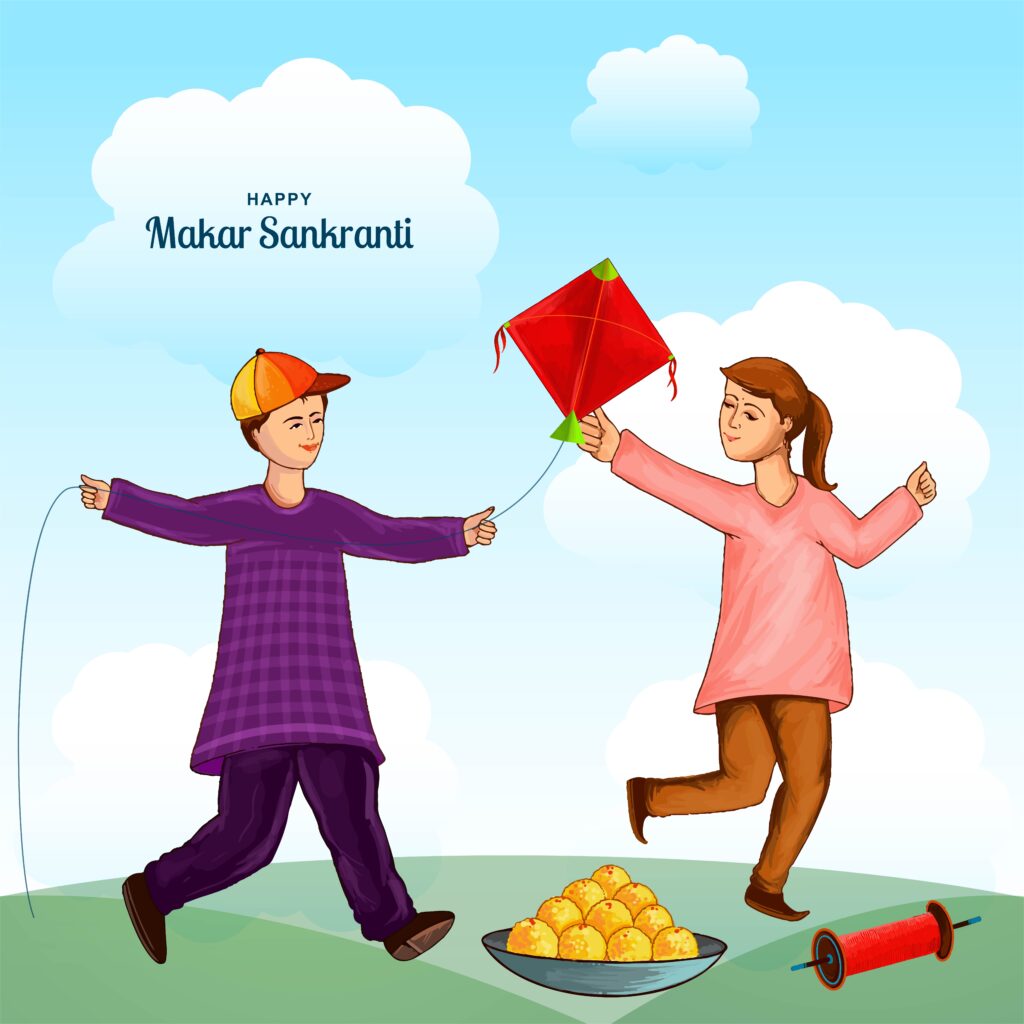
The Joy of Kite Flying
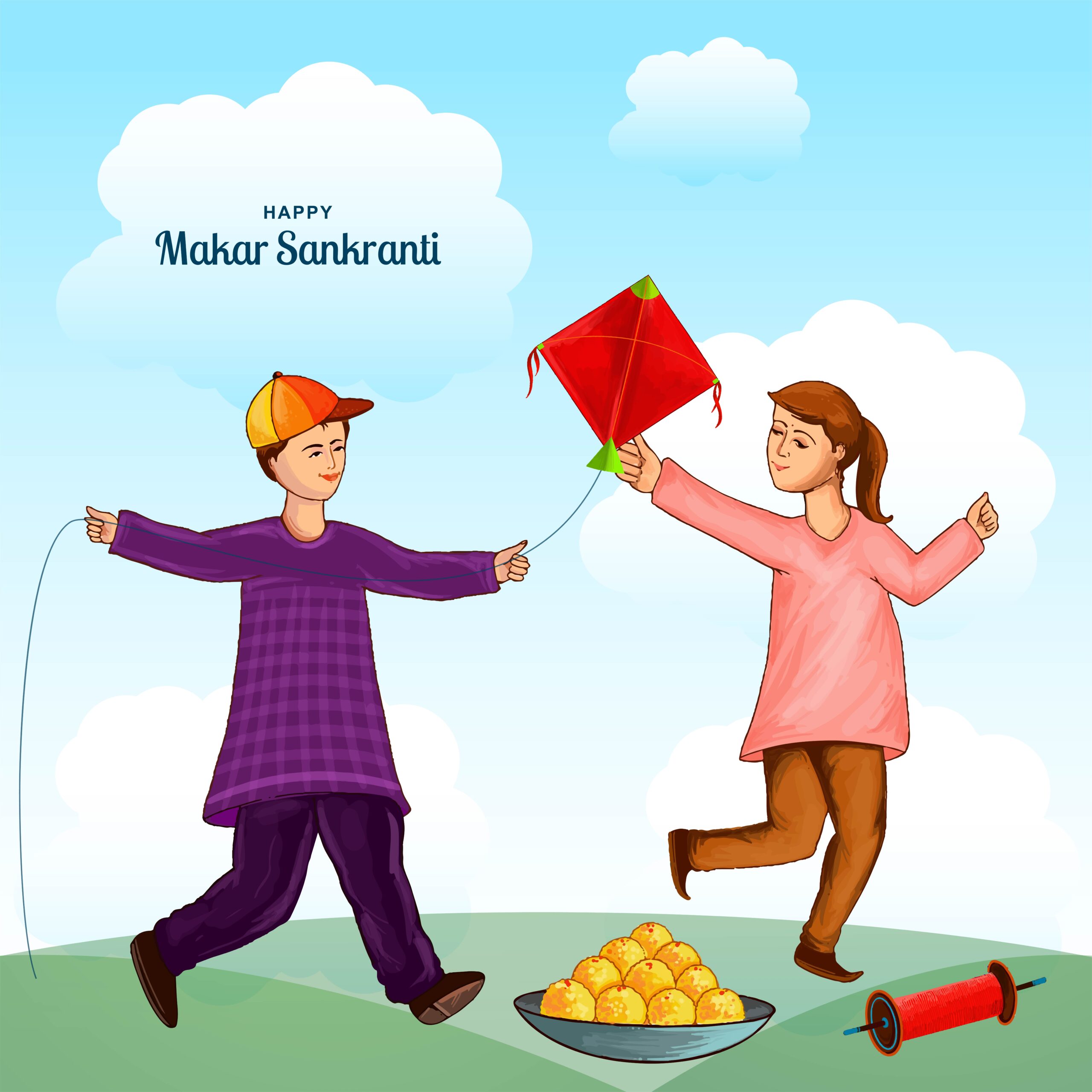
One of the most exciting parts of Makar Sankranti is kite flying, especially in Gujarat, Rajasthan, and North India.
The clear winter sky becomes a canvas of vibrant colors as people of all ages fly kites from rooftops and terraces.
Kite flying on Makar Sankranti holds deep meaning:
- It represents freedom, positivity, and high aspirations.
- The act of flying kites under the warm winter Sun is also believed to be good for health, as exposure to sunlight helps increase Vitamin D.
- The competition of “Kai Po Che” adds excitement as people challenge each other with laughter and cheer.
In cities like Ahmedabad and Jaipur, international kite festivals are organized, attracting visitors from around the world.
Thus, kite flying is not just fun — it’s a symbol of joy, unity, and celebration of life.
Rituals and Customs
Surya Puja:
Offer water, flowers, and jaggery to the rising Sun while chanting mantras.
Daan (Charity):
Donate sesame seeds, jaggery, blankets, and clothes to the poor.
Charity done on this day is said to bring great merit.
Til-Gud Tradition:
Eating til (sesame) and gud (jaggery) signifies purity and sweetness — a reminder to live a kind and simple life.
Kite Flying:
Flying kites under the winter Sun is both fun and healthy.
It symbolizes aiming high, letting go of negativity, and embracing light.
Mythological Stories
Several legends are connected with Makar Sankranti:
Bhishma Pitamah’s Moksha: It is believed that Bhishma Pitamah from the Mahabharata chose to leave his body on Makar Sankranti to attain salvation.
Surya and Shani Dev: This day marks the meeting of father (Surya) and son (Shani), symbolizing harmony and unity.
Descent of Ganga: The river Ganga is said to have reached the ocean on this day, hence taking a holy dip is considered sacred.
Astrological Importance
Makar Sankranti marks the Sun’s entry into Capricorn, which changes the energy pattern of nature and the human mind.
It’s believed that during Uttarayan, divine energies are stronger and bring prosperity, health, and spiritual growth.
Food and Traditions
Each region celebrates with special dishes made from til (sesame), gud (jaggery), and rice — considered warm and nutritious for winter.
Common foods include til-gud laddoos, khichdi, puran poli, pongal, and gur chikki.
These dishes symbolize unity, energy, and sweetness in relationships.
Conclusion
Makar Sankranti is more than a festival — it’s a celebration of light, balance, and renewal.
It connects us to nature, teaches gratitude, and encourages spiritual awakening.
As we fly kites and share sweets, may this day bring prosperity, health, and happiness to every home.
“Let the light of the Sun fill your life with positivity and endless energy.”